

The holiday season is such an exciting time, however, the holidays can be triggering for some. Whether it is the stress from all of the things that need to be done, or dealing with grief due to the loss of a loved one – the holiday season can be hard on your mental health. Today’s post I want to focus on an aspect of mental health that is near and dear to my heart.
This post is dedicated to all mothers who have experienced challenges and difficulties postpartum. I have shared my experience here on my blog. Having experienced this first-hand, I am a huge advocate for women’s mental health, in particular, mothers’ mental health. There are so many aspects to a mother’s postpartum care that most go under the radar or are neglected. Often times when we think of postpartum, we may think of breastfeeding, stitches, body snap-back, and maybe even depression. However, these things are barely touching the tip of the iceberg when it comes to postpartum. Even in terms of depression, there is so much more to it than “baby blues”.
In previous posts, I have shared my experiences with the psychological aspect of postpartum which for me included depression, anxiety, rage, and suicide ideation. In this post, you will read about other mothers’ unique experiences with postpartum because not all experiences are the same. In fact, they’re each like a snowflake – similar in makeup but completely unique in design.
In addition to reading testimonials from other mothers, we will explore what postpartum is by definition, the resources available to mothers as well as methods to better care of mothers as a whole. We are diving deep today into this topic because as a mother myself, it is something that means a lot to me. If you are a mother, have family or friends who are mothers, or have a spouse who is or aspiring to be a mother – then this post is worth reading.
What Does Postpartum Mean?
“Postpartum is everything after you have the baby. You’re in postpartum until your child becomes an adult. It’s still something that I deal with now. I feel like I deal with it even more severely now.”
Loren H.
According to Merriam-webster, the definition of postpartum is Occurring in or being the period following childbirth. While most definitions include up to 6 weeks post-childbirth, I firmly believe that it is ongoing. I definitely feel that postpartum is continual until your child becomes an adult. As long as I am caring for my child, I will always experience things that branch from my pregnancy and delivery. That is why those two moments in a mother’s life are extremely crucial.
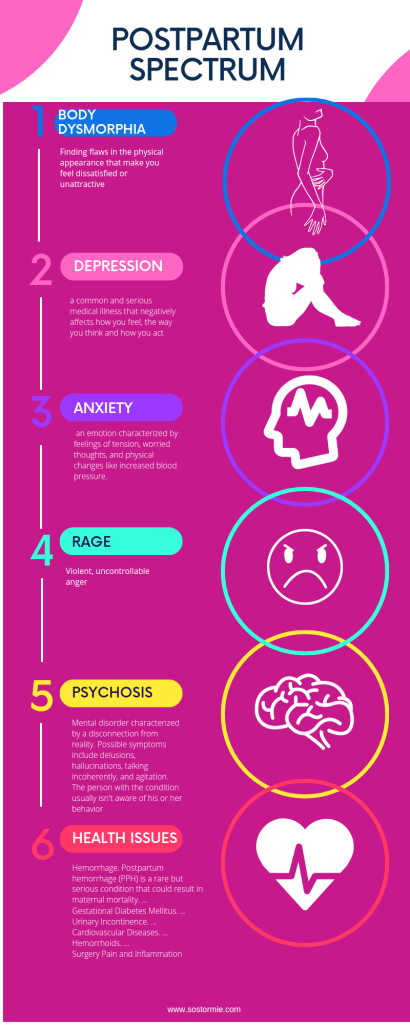
What is included in the full scope of postpartum?
- Depression
- Anxiety
- Rage
- Psychosis
- Body Dysmorphia
- Physical Health Issues
What are some symptoms of postpartum?
- Depressed mood or severe mood swings
- Crying too much
- Difficulty bonding with baby
- Withdrawing from friends and family
- Loss of appetite or eating much more than usual
What are some statistics on Postpartum?
- About 50% of women who were diagnosed with postpartum depression experienced symptoms of depression during their pregnancy
- Over half of pregnant women do not receive treatment
- One in five pregnant women was not asked about depression during a prenatal visit
- IF left untreated, it can impact the mother’s health and may cause eating, sleeping, and behavioral problems for the baby
What’s been my personal postpartum experience?
I vividly remember doing a written assessment about my mental health. I knew something was up because I hadn’t felt like myself since before I got pregnant. While I did my best to accept the changes that came throughout my pregnancy – I struggled with intrusive thoughts. Depression, anxiety, manic intrusive thoughts, suicide ideation, rage, and hallucinations are all things that I experienced at some point during my postpartum experience.
What are the psychological effects associated with postpartum?
“I’ve always wanted to be a mother, to the point that I know that’s what God put me on this earth. I’ve struggled with anxiety and depression most of my life, so of course I (and my husband) were worried about how having a baby would affect my mental heath. I knew in my heart of hearts I would figure things out and work through anything to give my baby the best life, but in reality…it was a lot scarier than I was prepared for. I know PPD and PPA look diffferent for everyone, but for me it looked like weeks of endless tears. I helt helpless nd hopeless while trying to keep a tiny neborn alive. From the outside it may have looked like I was doing everything i needed to do for him, but on the inside it felt like nothing I did was right and I was drowning. I questioned every single thing I did. From where all I put the diaper cream, to how I laid him down to sleep, to if he was getting enough when breastfeeding. I would often just hold him and cry while rocking him. Hoping and praying that he would grow and thrive despite me not giving him what he needed. Looking back I know I gave him everything he needed and more. But in the moment, my brain told me he was lacking and it was my fault. I’d have intrustive thoughts of horrible things happening to him and me not being able to save him.”
Raquel F.
“Being someone that was already disposed to depression and anxiety, ny therapist and I talked and knew that I would need to continue therapy throughout my pregnancy. My therapist doesn’t sprecialize in postpartum care, he knew that I would really need to stay on top of my pregnancy. Even during pregnancy, I experienced a lot of depression. I was sad often because of my child’s father who’s not in her life – was not present during my pregnancy. I had to experience a lot of those pains and things that come with that alone. It really did drive me into a really dark place. A place that some days I would have very scary thoughts about what I want to do to myself or my unborn child at the time. I did my best to push forward, I ended up not being in therapy as much as I wanted to be, due to finances. It just wasn’t ideal. I could feel the hole that I was being wedged into, go deeper and deeper.”
Loren H.
Traditionally, what resources have been available to mothers who have experienced any of these effects?
A lot of variables determine what resources mothers have at their disposal. Socio-economic status, the support of the child’s father or partner, health insurance, transportation, and countless others all contribute to the resources that a mother will be able to access. Those variables play a role in the early conception of the baby. If it weren’t for insurance, I would not have been able to go to therapy regularly. My health insurance allowed me the space and time to heal from a psychological standpoint without hurting myself or my baby.
What other resources (financial, socio-economic, social, community) are available to mothers?
Managing postpartum anxiety often involves a combination of self-care strategies, professional support, and, in some cases, medication. Here are some steps that can help:
Seek Professional Help: Consult a mental health professional, such as a therapist or psychiatrist, who has experience in treating postpartum anxiety. They can provide an accurate diagnosis and recommend appropriate treatment options.
Therapy: Cognitive-behavioral therapy (CBT) is commonly used to treat anxiety. It helps individuals identify and challenge negative thought patterns and develop healthier coping strategies. In addition to seeing a therapist, I also went to a support group with other moms every week. It felt really nice having other mothers to connect with who were experiencing the same things.
Medication: In some cases, medication may be recommended, such as antidepressants or anti-anxiety medications. A healthcare provider can discuss the potential benefits and risks of medication.
Support System: Surround yourself with a supportive network of family and friends who can offer emotional assistance and help with daily tasks. This can include not limited to: friends, family, therapists, partners, colleagues, emotional support groups, government assistance through funded programs, and more.
Self-Care: Prioritize self-care activities that promote relaxation and well-being, such as exercise, deep breathing, mindfulness, and getting adequate sleep.
Healthy Lifestyle: Maintain a balanced diet and engage in regular physical activity. Avoid excessive caffeine and alcohol consumption. If you find yourself having a difficult time limiting your consumption, it’s worth looking into what’s triggering that need.
Limit Stressors: Try to reduce unnecessary stressors in your life. Delegate tasks and give yourself permission to say no to commitments that may overwhelm you. This one has been crucial for me. I would often say yes to things just so that I wouldn’t be missing out or upsetting anyone. At least that is what was going through my mind when asked to commit to things. By honoring myself first and my needs, I am able to better acknowledge and limit these stressors.
Time Management: Break down tasks into manageable steps and prioritize what needs to be done. Avoid putting too much pressure on yourself to be perfect. I have come to the reality that my house will not always be clean or the neatest. I am at peace with that because I used to be so hard on myself to clean everything every single day. It is practically impossible when my husband and I work at different times of the day and we have an active toddler. Once I gave myself permission to no longer be perfect, that alleviated some stress.
Breastfeeding Considerations: If breastfeeding, be aware that certain medications can pass through breast milk. Consult a healthcare provider to discuss safe options.
Open Communication: Talk to your partner, family, and friends about how you’re feeling. Sharing your emotions can help you feel understood and supported. My husband is now more aware of my body language when I am struggling mentally. He gives me the space to talk about it when I am ready and as long as I need to. It has been imperative to have someone to share my feelings with at any time.
Mindfulness and Relaxation: Practice mindfulness techniques, meditation, and relaxation exercises to reduce anxiety symptoms. I am now able to identify when my mindset is headed to a bad place through my body. I may begin to experience a headache, tightness in the stomach, clenching of my jaw, or fidgeting. Once I acknowledge that, I can look into the emotion behind it. From there, I can determine why I feel that way and what I can do to alleviate it. It’s scientifically proven that taking deep breaths can help regulate your nervous system. This and meditation have helped to slow down when my mind begins to race or if I am overstimulated.
Ways to Support Mothers
- Give mothers grace and patience. Giving birth is one of the most beautiful and traumatic things that a woman’s body can go through. It takes mothers 9 months to create a life but It takes much longer to recover. Mothers need support to rest and recover.
- Offer to make her life easier by offering food, food delivery, cooking dinner, helping with the laundry, cleaning the bottles, or if possible, watching the baby while she rests. Each mother is different so provide these options and ask which would she prefer.
- If possible, offer to take her to the baby’s appointments if Dad can’t. She’s still healing physically so having an extra set of hands to do the manual labor will help her immensely.
- Know and understand that the mother often needs more support and love NOW that she’s had her baby. We often prioirtize that baby and neglect the mother. We as a whole need to improve on this.
- Offer her space to do whatever she needs to feel like herself. Being a mother is the most selfless thing that a person can be. Oftentimes the consequence to this is the mother neglecting her needs and wants. This will vary from one mother to another. Ask her what ways you can support her so that she can do things purely for herself to bring joy and peace of mind.
Mothers what would you contribute to this post that can encourage and support mothers postpartum? Contribute in the comment section below!
***Announcement***
I’m excited to be a part of the documentary film and panel for “Mother May I“. Support Black & Brown single mothers’ resilience in ‘Mother, May I.’ Join us for an evening of empowerment using film, dance and spoken word.
Discover the heartfelt journey of resilience and triumph in “Mother, May I.” This evocative film offers an intimate portrayal of Black and Brown single mothers, capturing their unwavering strength as they navigate life’s challenges with grace. Through captivating storytelling, the film delves into their unique experiences, shedding light on the triumphs and tribulations that shape their lives. In this exclusive preview screening, witness the fusion of dance and spoken word, elevating their narratives to new heights of emotional resonance. “Mother, May I” celebrates the unbreakable bond between mothers and their children, while honoring the diverse voices and stories within Black and Brown communities. Join us for an evening of empowerment and connection, as we explore the profound tapestry of motherhood.
This showing is funded in part by The City of Houston and Houston Arts Alliance as part of the Let Creativity Happen Grant. Come out this Friday the 15th to enjoy this beautiful event!

